terça-feira, 10 de setembro de 2019

New Malware Uses Windows BITS Service to Stealthy Exfiltrate Data

Mohit Kumar in 09/09/2019 - The Hackers News


stealthfalcon malware windows bits
Cybersecurity researchers have discovered a new computer virus associated with the Stealth Falcon state-sponsored cyber espionage group that abuses a built-in component of the Microsoft Windows operating system to stealthily exfiltrate stolen data to attacker-controlled server.

Active since 2012, Stealth Falcon is a sophisticated hacking group known for targeting journalists, activists, and dissidents with spyware in the Middle East, primarily in the United Arab Emirates (UAE).

Dubbed Win32/StealthFalcon, named after the hacking group, the malware communicates and sends collected data to its remote command-and-control (C&C) servers using Windows Background Intelligent Transfer Service (BITS).

BITS is a communication protocol in Windows that takes unused network bandwidth to facilitate asynchronous, prioritized, and throttled transfer of files between machines in the foreground or background, without impacting the network experience.

BITS is commonly used by software updaters, including downloading files from the Microsoft servers or peers to install updates on Windows 10, messengers, and other applications designed to operate in the background.

According to security researchers at cyber-security firm ESET, since BITS tasks are more likely permitted by host-based firewalls and the functionality automatically adjusts the data transfer rate, it allows malware to stealthily operate in the background without raising any red flags.

"Compared with traditional communication via API functions, the BITS mechanism is exposed through a COM interface and thus harder for a security product to detect," the researchers say in a report published today.

"The transfer resumes automatically after being interrupted for reasons like a network outage, the user logging out, or a system reboot."

Besides this, instead of exfiltrating the collected data in plain text, the malware first creates an encrypted copy of it and then uploads the copy to the C&C server via BITS protocol.

After successfully exfiltrating the stolen data, the malware automatically deletes all log and collected files after rewriting them with random data in order to prevent forensic analysis and recovery of the deleted data.

As explained in the report, Win32/StealthFalcon backdoor has not only been designed to steal data from the compromised systems but can also be used by attackers to further deploy more malicious tools and update its configuration by sending commands through C&C server.

"The Win32/StealthFalcon backdoor, which appears to have been created in 2015, allows the attacker to control the compromised computer remotely. We have seen a small number of targets in UAE, Saudi Arabia, Thailand, and the Netherlands; in the latter case, the target was a diplomatic mission of a Middle Eastern country," the researchers say.

According to the researchers, this newly discovered malware shares its C&C servers and code base with a PowerShell-based backdoor attributed to the Stealth Falcon group and tracked by the Citizen Lab in 2016.

A música que você ouve pode carregar dados embutidos

Dados embutidos em músicas
Qualquer aparelho dotado de um microfone consegue entender os dados, mas sua presença é imperceptível ao ouvido humano.
[Imagem: ETH/Colourbox]

Dados embutidos em músicas
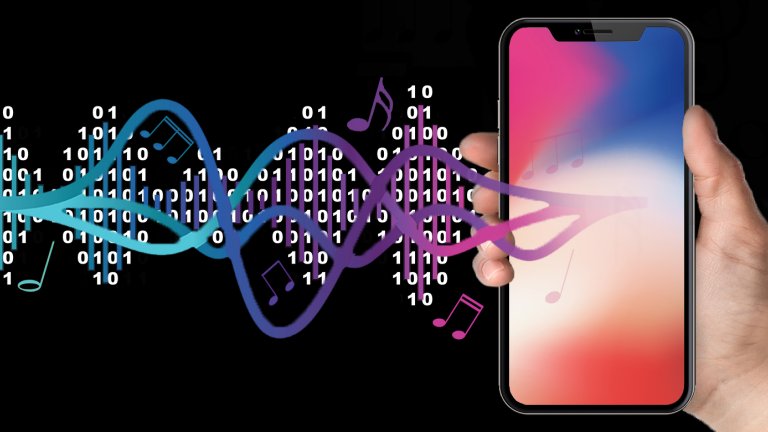
Pesquisadores do Instituto Federal de Tecnologia de Zurique (ETH) desenvolveram uma técnica que permite incorporar dados em músicas e transmiti-las como stream ou arquivos para um celular ou computador.
Como os dados incorporados são imperceptíveis para o ouvido humano, esse "cavalo de troia" de informações não afeta a experiência de ouvir a música, que toca da mesma forma que a original. E qualquer aparelho dotado de um microfone consegue entender os dados.
Testes realizados em condições ideais mostraram uma capacidade de transferir até 400 bits por segundo sem que o ouvinte médio percebesse a diferença entre a música original e a versão modificada.
Dado que, sob condições realistas, um grau de redundância é necessário para garantir a qualidade da transmissão, a taxa de transferência provavelmente será de cerca de 200 bits - ou cerca de 25 letras - por segundo.
"Teoricamente, seria possível transmitir dados muito mais rapidamente. Mas quanto mais alta a taxa de transferência, mais cedo os dados se tornam perceptíveis como som interferente, ou a qualidade dos dados decresce," disse Simon Tanner, um dos criadores da técnica.
Transferência de dados acústica
O truque consiste em pegar as notas dominantes em uma música e "cobrir" cada uma delas com duas notas ligeiramente mais profundas e duas notas ligeiramente mais altas, que são mais silenciosas do que a nota dominante. Também são utilizados os harmônicos (uma ou mais oitavas mais altas) da nota mais forte, igualmente inserindo notas ligeiramente mais profundas e mais altas. São essas notas adicionais que carregam os dados.
Embora o microfone de um celular seja capaz de receber e analisar esses dados, o ouvido humano não consegue distinguir as notas adicionais. "Quando ouvimos uma nota alta, não notamos notas mais baixas com uma frequência um pouco maior ou menor," explicou o pesquisador Manuel Eichelberger. "Isso significa que podemos usar as notas altas e dominantes em uma música para esconder a transferência de dados acústica."
Também significa que as músicas ideais para esse tipo de transferência de dados devem ter muitas notas dominantes - músicas pop, por exemplo. Músicas tranquilas são menos adequadas.
"Em muitos lugares públicos, como lojas, estádios, estações de trem e restaurantes, alto-falantes tocam música de fundo. Nossa técnica abre o potencial para uma rota de comunicação fácil dos alto-falantes para microfones sem requisitos de hardware adicional ou qualquer configuração. A taxa de dados de várias centenas bits por segundo é suficiente para várias aplicações," escreveu a equipe.
Bibliografia:

Artigo: Imperceptible Audio Communication
Autores: Manuel Eichelberger, Simon Tanner, Gabriel Voirol, Roger Wattenhofer
Revista: 44th ICASSP Proceedings
Link: https://tik-old.ee.ethz.ch/file/8a61c16532c1d4f9021d3aaf06f4f381/imperceptible_audio_communication.pdf