Redação do Site Inovação Tecnológica - 17/04/2019
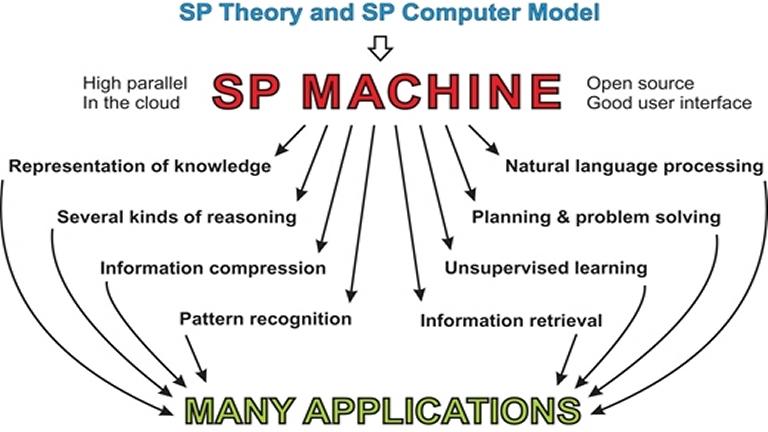
O Sistema SP não sofre de nenhum dos pontos fracos identificados no aprendizado profundo.[Imagem: J. Gerard Wolff]
Inteligência artificial com menos problemas
Apesar do grande sucesso, na prática e na mídia, tem havido uma preocupação crescente com as deficiências da inteligência artificial, sobretudo com falhas das técnicas do chamado aprendizado profundo.
Vasile Palade (Universidade Coventry) e Gerry Wolff (Cognition Research), acreditam que já é possível começar a desenvolver um novo modelo de inteligência artificial que supere as deficiências dos sistemas atuais.
Eles chamam a atenção para limitações da aprendizagem profunda, como o "esquecimento catastrófico", o que significa que, quando um sistema de aprendizagem profunda aprende algo novo, esse novo aprendizado pode eliminar tudo o que o sistema aprendeu antes. Isso tem levantado uma preocupação crescente sobre se a aprendizagem profunda seria mesmo o caminho para o desenvolvimento de uma inteligência artificial que consiga competir com a inteligência humana.
A dupla propõe uma outra rota: a Teoria da Inteligência SP, desenvolvida para combinar a simplicidade (S) em sua estrutura e em seu funcionamento com o poder (P) descritivo e explicativo em uma gama relativamente ampla de áreas da inteligência artificial.
Teoria da Inteligência SP
Em termos gerais, um sistema SP é um sistema tipo cerebral que captura informações novas através de seus "sentidos" e armazena algumas ou todas elas como "informações velhas", o que deixa o sistema sempre aberto ao novo, sem se esquecer do passado.
Uma alternativa à aprendizagem profunda, a Teoria da Inteligência SP está em desenvolvimento desde 1987 usando modelos de computador como meio de expressar a teoria, testá-la e demonstrar o que ela pode fazer.
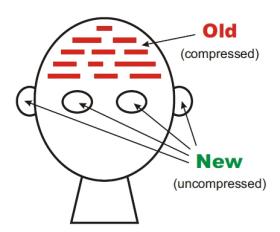
Essa inteligência artificial tipo cerebral nunca se esquece. [Imagem: J. Gerard Wolff]
Ela ainda não consegue aprender xadrez ou Go, mas, em comparação com o aprendizado profundo, tem pontos fortes e potenciais em uma área mais ampla, incluindo como o sistema aprende, vários tipos de raciocínio, reconhecimento de padrões, recuperação de informações armazenadas, processamento de linguagem natural, fazer planos e resolver problemas.
A dupla afirma que, ao menos em termos de teoria da inteligência e modelo computacional, o Sistema SP não sofre de nenhum dos vários pontos fracos identificados na aprendizagem profunda.
Máquina SP
Com a teoria fundamentada e um sistema já elaborado, falta agora partir para a prática, para uma máquina de inteligência artificial SP.
"A máquina SP será desenvolvida inicialmente como uma máquina virtual de software com altos níveis de processamento paralelo, hospedada em um computador de alto desempenho. O sistema deverá ajudar os usuários a visualizar estruturas de conhecimento e processamento," diz a dupla.
Com sua proposta, eles esperam agora entusiasmar outros pesquisadores para que se possa formar um consórcio para o desenvolvimento das primeiras máquinas SP.
"Como o equipamento necessário é agora bastante acessível, equipes de pesquisadores em outros lugares, ou indivíduos, podem cooperar no desenvolvimento da Máquina SP," afirmam.
Bibliografia:
A Roadmap for the Development of the SP Machine for Artificial Intelligence
Vasile Palade, J. Gerard Wolff
The Computer Journal
Vol.: bxy126
DOI: 10.1093/comjnl/bxy126
Introduction to the SP theory of intelligence
J. Gerard Wolff
https://arxiv.org/abs/1802.09924
A Roadmap for the Development of the SP Machine for Artificial Intelligence
Vasile Palade, J. Gerard Wolff
The Computer Journal
Vol.: bxy126
DOI: 10.1093/comjnl/bxy126
Introduction to the SP theory of intelligence
J. Gerard Wolff
https://arxiv.org/abs/1802.09924


